
Key Takeaways
- Buyers in 2026 prioritise trust as much as price and quality—80% say they only buy from brands they believe in.
- Relationship selling focuses on long-term value, trust, and loyalty, not just closing deals quickly.
- In Malaysia’s trust-driven market, personal rapport, cultural sensitivity, and consistency matter more than pressure tactics.
- 91% of B2B sales are influenced by word of mouth, proving that strong relationships drive serious business impact.
- Traditional sales tactics often backfire in Malaysia, where hard selling can harm credibility and slow decision-making.
- Trust-building can be learned through practical, culture-aligned training that helps teams listen better, follow through, and deliver real value.
- Thriving Talents’ training and workshops are designed for the Malaysian business culture, equipping sales teams with relationship-first strategies that drive results.
Introduction
Selling today is no longer just about scripts, funnels, or clever closing techniques. As of 2026, buyers are more informed, more cautious, and far more selective about who they choose to work with.
In Malaysia, brand trust has emerged as a top‑three purchase consideration alongside price and quality, while 80% of people globally say they only buy from brands they trust.
Trust has therefore become the real driver of long-term sales success. Customers want to feel understood, respected, and confident in the people they buy from—not pressured into quick decisions.
In Malaysia, especially, relationships often matter more than short-term wins. Business is built on trust, reputation, and long-term connections, making relationship selling far more effective than aggressive, transactional tactics.
What Is Relationship Selling?
Relationship selling is a sales approach built on trust, mutual understanding, and long-term value. It prioritises the customer relationship over the immediate transaction and seeks to solve real problems, not just push products.
Instead of viewing success as closing a deal, relationship selling focuses on repeat business, loyalty, and word-of-mouth referrals. It’s about being a trusted advisor, not just a salesperson.
How Does a Relationship Selling Approach Work?
- Start by understanding the person, not the deal: Take time to learn about the customer’s needs, priorities, and challenges before offering solutions.
- Build credibility through consistent actions: Keep promises, follow up when you say you will, and be reliable in every interaction.
- Create value in every conversation: Share useful insights or ideas even if there’s no immediate deal. This positions you as helpful, not transactional.
- Develop trust over repeated interactions: Trust takes time. Stay connected through follow-ups, check-ins, and meaningful conversations.
- Move naturally toward long-term partnerships: Once trust is built, customers are more open to collaboration, repeat business, and referrals.
What Is the Difference Between Relationship Selling and Transactional Selling?

Relationship selling and transactional selling differ mainly in how value is created and sustained. One focuses on long-term trust, while the other prioritises immediate deal closure.
Aspect | Relationship Selling | Transactional Selling |
Main focus | Building trust and long-term relationships | Closing the sale quickly |
Sales approach | Customer-first and consultative | Deal-first and price-driven |
Timeframe | Long-term engagement | Short-term results |
Customer interaction | Ongoing conversations | Limited, one-off interactions |
Value creation | Understanding needs and offering solutions | Emphasising price or promotions |
Customer loyalty | High loyalty and repeat business | Low loyalty, easy to switch |
Why Relationship Selling Works Better in the Malaysian Market?
In Malaysia, business is personal. Buyers often rely on trust, reputation, and personal recommendations when making decisions. A salesperson who understands local customs, communicates respectfully, and builds rapport earns far more trust than one focused solely on closing.
Referrals and word-of-mouth are powerful forces—especially in B2B, where they influence up to 91% of all sales in some way. Aggressiveness can damage credibility, while patience and consistency are seen as signs of professionalism. In a culture where long-term thinking is valued, relationship selling resonates more deeply than high-pressure tactics.
Why Traditional Sales Tactics Often Backfire in Malaysia?
While transactional tactics may work in fast-moving, price-driven markets, they often clash with Malaysia’s relationship-oriented business culture—leading to resistance rather than results.
- Hard selling can feel pushy or disrespectful, especially when trust has not yet been established.
- Overemphasis on closing creates resistance, making buyers more guarded and less open.
- Short-term tactics weaken long-term relationships, reducing repeat business and referrals.
- Buyers disengage when they feel pressured, not understood.
- Aggressive selling undermines credibility, particularly in close-knit professional networks.
- Ignoring cultural nuances damages rapport, slowing decision-making instead of accelerating it.
- Price-driven tactics encourage comparison shopping, making it easier for buyers to switch.
Also read: Traditional vs Modern Sales Training Methods: Which Works Better in Malaysia?
How to Build Trust With Malaysian Buyers?
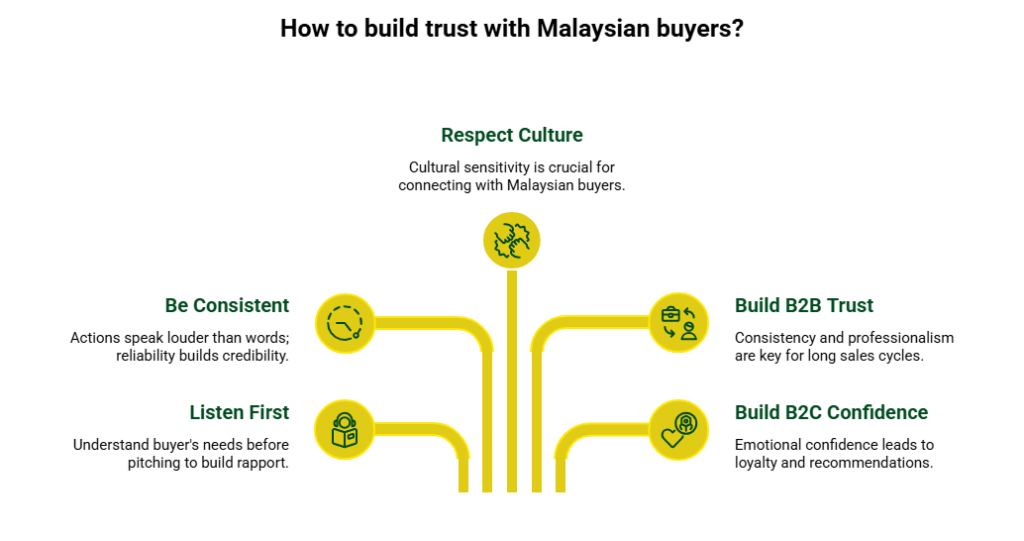
In Malaysia, earning trust is essential to successful selling. It’s not just about what you offer—it’s how you connect, follow through, and respect the buyer’s expectations. Here’s how sales professionals can build meaningful relationships that lead to lasting results.
Listen First and Understand the Buyer
Begin every interaction by asking thoughtful questions and showing genuine interest. Don’t rush into a pitch. Instead, focus on understanding the buyer’s world before offering your solution.
Be Consistent and Reliable Over Time
Trust is built through actions, not promises. Whether it’s a callback, meeting, or follow-up, being dependable builds credibility over time.
Respect Cultural and Communication Differences
In Malaysia, indirect cues matter. 90% of Malaysian shoppers prioritise brands that reflect their values and faith, making cultural sensitivity essential. Adjust your tone, respect local norms, and build comfort before diving into business discussions.
Build Deeper Trust in B2B Sales Relationships
With longer sales cycles and multiple decision-makers, relationship building must extend across stakeholders. Consistency and professionalism throughout the journey are essential.
Build Emotional Confidence in B2C Relationships
B2C buyers want to feel good about their decision. When they trust the salesperson, they’re more likely to repurchase, recommend, and remain loyal—even in competitive markets.
How Relationship Selling Can Be Learned and Strengthened?
Relationship selling isn’t just a natural talent—it’s a skill that sales teams can develop through awareness, empathy, and consistent practice. By focusing on trust-building behaviours like active listening, meaningful follow-ups, and adding value in every conversation, teams can deepen relationships with each client interaction.
Structured training plays a key role in making this shift. When sales teams move from a short-term, deal-first mindset to a long-term, partnership-driven approach, they see more sustainable success and customer loyalty. Also read: What Is Sales Training? A Complete Guide for Malaysian Corporates.
At Thriving Talents, our practical, culture-aligned Sales and Marketing Workshops are built specifically for Malaysian businesses. We help teams master relationship-first selling by focusing on trust, credibility, and real-world application that delivers results over time.
FAQ
Why is trust important in sales?
Trust creates confidence, reduces buyer resistance, and encourages repeat business—especially in long-term relationships.
Is relationship selling suitable for both B2B and B2C?
Yes, both require trust. B2B involves more stakeholders, while B2C relies on emotional confidence and credibility.
How is relationship selling different from traditional sales tactics?
Traditional tactics focus on closing quickly, while relationship selling prioritises understanding, value, and loyalty.
Can relationship selling be taught through training?
Yes. Skills such as listening, communication, and trust-building can be developed through training and practice.
Can relationship selling improve long-term customer loyalty?
Yes. Trust-based relationships are more likely to result in repeat business, referrals, and long-term brand advocates.
Do sales targets still matter in relationship selling?
Yes, but the path to hitting targets comes through building relationships, not forcing deals.
How can sales teams balance trust-building with closing deals?
By focusing on the customer’s needs first. When trust is strong, closing becomes a natural next step—not a forced outcome.
Conclusion
In a world of changing buyers and crowded markets, trust remains the foundation of sustainable sales success.
Relationship selling empowers businesses to build deeper partnerships, win customer loyalty, and grow through genuine connections, not just clever tactics. And in Malaysia, trust beats tactics every time.
Ready to train your team in relationship-first selling? Explore how Thriving Talents helps teams build long-term customer partnerships.