Key takeaways:
- Traditional sales training often relies on passive learning, generic scripts, and limited real-world application.
- Modern sales training focuses on practice, personalisation, and behavioural change, making it more effective in diverse and dynamic environments.
- In Malaysia, sales success depends heavily on relationship-building, emotional intelligence, and cultural sensitivity.
- Generic training approaches fail to reflect Malaysia’s multi-cultural sales environment and trust-driven business norms.
- Modern programmes that include simulations, role plays, and localised content deliver stronger, longer-term performance outcomes.
- Effective sales training must begin with diagnosis and be tailored to roles, customers, and local sales behaviours.
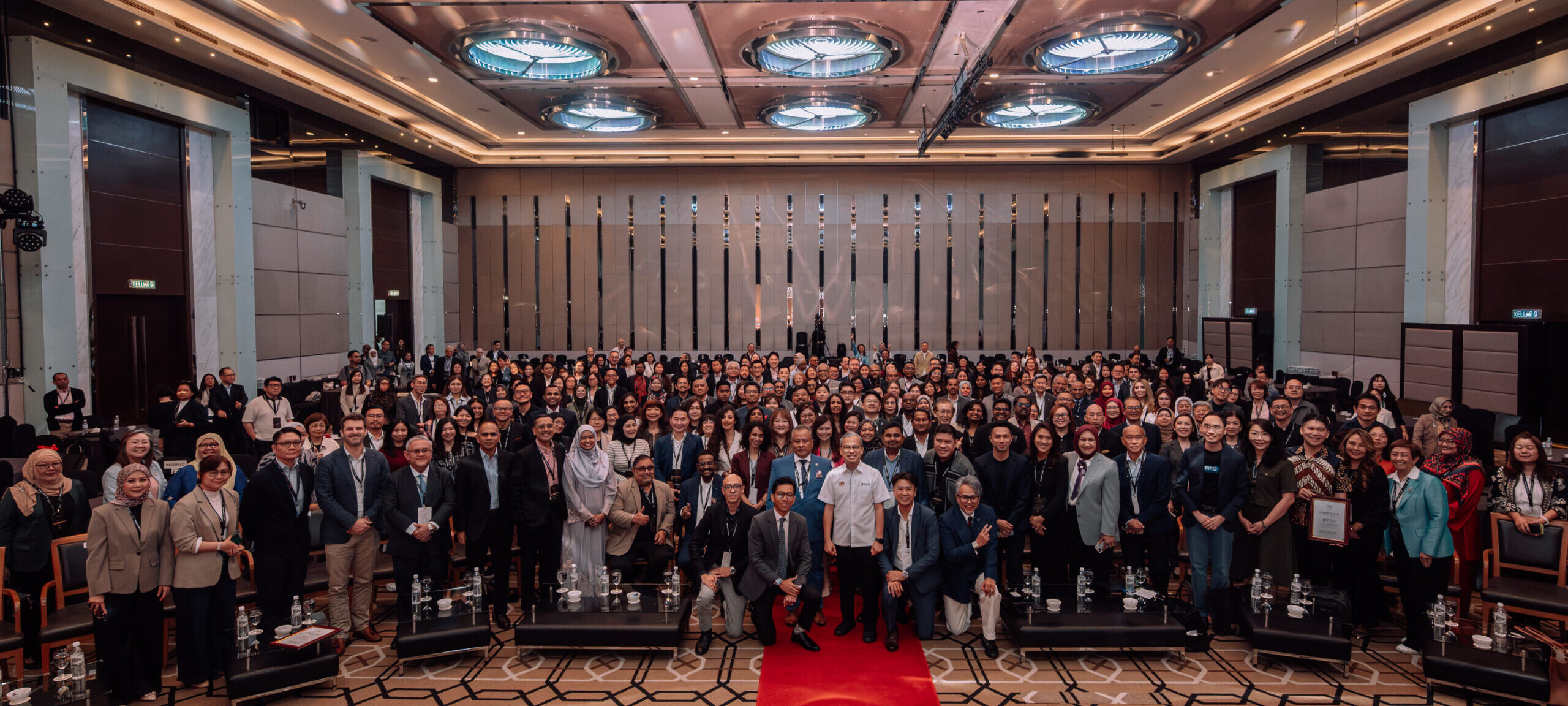
- Thriving Talents—winner of two Gold Awards at the HR Vendors of the Year 2025, including ‘Best Sales Training Provider’—delivers sales development programmes that combine behavioural science, cultural relevance, and practical frameworks built for Malaysia.
Introduction
Sales training is evolving, but the debate between traditional and modern methods remains ongoing. Traditional training often leans on lectures, product knowledge, and standardised scripts, while modern approaches prioritise hands-on learning, role-based scenarios, and continuous reinforcement.
But here’s the problem: According to 2025 data, up to 90% of new information is forgotten within a week when delivered through “one-and-done” lecture-style sessions. This makes it clear that effectiveness isn’t just about the method—it’s about the fit. And that fit depends on who you’re training, where they operate, and how customers buy.
In Malaysia, sales success hinges on cultural awareness, relationship-building, and the ability to navigate a high-context, multi-ethnic market. This makes the choice of training method more than just a preference; it’s a strategic decision.
When training reflects how Malaysians actually sell and connect, it builds not just skills, but trust, performance, and long-term results.
What Is the Difference Between Traditional and Modern Sales Training?
Sales training is meant to build the skills, behaviours, and mindset that enable salespeople to perform at a higher level. While the goals remain largely the same, the method of delivery has changed significantly over the years.
Also read: What Is Sales Training? A Complete Guide for Malaysian Corporates
What Is Traditional Sales Training?
Traditional sales training leans heavily on lectures, slides, and one-size-fits-all content. It focuses on product knowledge, scripts, and theoretical models applied across industries, often with little regard for context.
There is minimal interaction or practical application built into the process. Salespeople often leave these sessions with information, but without the opportunity to practise, reflect, or receive feedback. Follow-up support is rare, which means most of the learning doesn’t translate into behaviour change or on-the-ground improvement.
What Is Modern Sales Training?
Modern sales training is hands-on, practical, and tailored to the real challenges sales teams face. It replaces lectures with simulations, role plays, and coaching that reflect the sales environments reps actually operate in.
It focuses on building behaviours, not just knowledge—teaching reps how to lead better conversations, ask better questions, and make more effective decisions.
Learning doesn’t stop when the session ends; there is ongoing reinforcement, coaching, and measurement to ensure skills are retained, applied, and continuously improved over time.
Also read: How to Conduct a Sales Training Needs Assessment for Your Business?
Traditional vs Modern Sales Training: A Comparison Framework

To clearly understand how training styles influence performance, let’s compare traditional and modern sales training across key dimensions.
Category | Traditional Sales Training | Modern Sales Training |
Learning Style | Passive learning via lectures and presentations. | Active learning through simulations, role plays, and real scenarios. |
Relevance | Generic, standardised content with little relevance to actual customer conversations. | Contextualised and aligned to real sales conversations, industries, and buyer types. |
Skill Application | Focus on theory with limited opportunity for hands-on practice. | Immediate application through practical exercises and coaching. |
Long-Term Impact | Short-term motivation with limited behaviour change or follow-up. | Sustained performance improvement through reinforcement and continuous learning. |
Customisation | One-size-fits-all approach, delivered the same way to all audiences. | Tailored to roles, industries, segments, and experience levels for greater impact. |
Cultural Relevance | Ignores cultural nuances, ineffective in diverse markets like Malaysia. | Designed with cultural sensitivity, aligns with Malaysia’s relationship-based business. |
Learning Style
Traditional sales training often uses presentations and lectures that place participants in passive learning roles. While this format may deliver information, it doesn’t provide the practice needed to build confidence or fluency in real sales situations.
Modern sales training takes the opposite approach. Using simulations, role plays, and real-world scenarios, it puts learners in the driver’s seat. This encourages active participation, critical thinking, and real-time feedback. This turns knowledge into capability.
Relevance to Real Sales Conversations
In traditional training, content is typically broad and standardised, meaning it rarely reflects the nuances of real conversations salespeople have with their customers. It’s often based on assumptions rather than market-specific realities.
Modern methods begin with context. They take into account the industry, buyer type, and sales cycle, making training far more relevant. This enables salespeople to have customer-centric discussions, not just pitch rehearsals.
Skill Application
A major drawback of traditional training is the lack of opportunity to apply what’s learned. Reps may understand a technique in theory, but without hands-on practice, that knowledge often fades quickly.
Modern training programmes bridge this gap by integrating immediate skill application. Whether through live role plays, coaching labs, or post-training reinforcement, salespeople are actively applying new approaches in safe, supportive environments.
Long-Term Impact
Traditional training tends to generate short-term excitement but rarely drives sustained behaviour change. Without reinforcement, follow-up, or accountability, much of the learning is forgotten within weeks.
In contrast, modern training is built with longevity in mind. Through ongoing coaching, habit tracking, and post-training activities, it reinforces key behaviours, leading to measurable, lasting improvements in performance.
Customisation
Traditional programmes are often “one-size-fits-all,” delivering the same content to different roles, industries, and regions. This approach fails to address the unique needs of various teams and selling environments.
Modern training is highly customisable. It adapts to specific sales roles, verticals, customer segments, and even maturity levels. This makes the training more relevant and impactful from day one.
Cultural Relevance
Perhaps one of the biggest shortcomings of traditional sales training in Malaysia is its lack of cultural alignment. It often overlooks local customs, norms, and expectations—especially in relationship-heavy markets.
Modern training recognises and embraces these differences. It is designed with cultural nuance in mind, enabling sales teams to connect authentically with Malay, Chinese, and Indian buyers—building trust before closing deals.
Why Does Traditional Sales Training Fail in Modern Markets Like Malaysia?
In Malaysia, trust comes before transactions. The saying “Kawan dulu, business kemudian” (friend first, business later) reflects the importance of building credibility and connection before any deal is made. Traditional training, with its focus on pitching and product features, often fails to acknowledge this.
Malaysia is also a multi-cultural marketplace, with different expectations across Malay, Chinese, and Indian buyers. Generic sales scripts overlook these nuances and may alienate rather than engage.
Additionally, Malaysia is a high-context communication culture, where tone, respect, and relationship cues matter deeply. Traditional training typically overlooks emotional intelligence, yet this is precisely what’s needed to navigate such nuanced interactions.
Why Modern Sales Training Works Better in the Malaysian Market?
This brings us to why modern sales training approaches are far better suited to Malaysian organisations, particularly those operating in competitive, relationship-driven industries.
- Relationship-first selling: Focuses on trust, credibility, and long-term partnerships, aligning naturally with Malaysia’s relationship-driven business culture.
- Cultural adaptability: Equips sales teams to adapt their approach when engaging Malay, Chinese, and Indian buyers, rather than relying on rigid scripts.
- Customisation across roles and markets: Training is tailored to industries, customer segments, and experience levels, reflecting how sales actually happen on the ground.
- Learning by doing: Practice-based learning mirrors real sales conversations, building confidence and capability—not just theoretical knowledge.
- Emphasis on communication and emotional intelligence: Develops listening, questioning, and situational awareness, which are critical in high-context Malaysian business interactions.
- Focus on behaviour change, not just knowledge transfer: Reinforces habits and mindsets that salespeople apply consistently in real customer situations.
How Should Sales Training Be Adapted for Different Markets?
Different markets demand different approaches. The most effective types of corporate training programmes are those tailored to local buyer behaviour, cultural norms, and communication styles—because what works in one market can completely miss the mark in another.
For training to be truly effective, it must mirror these realities and adjust accordingly.
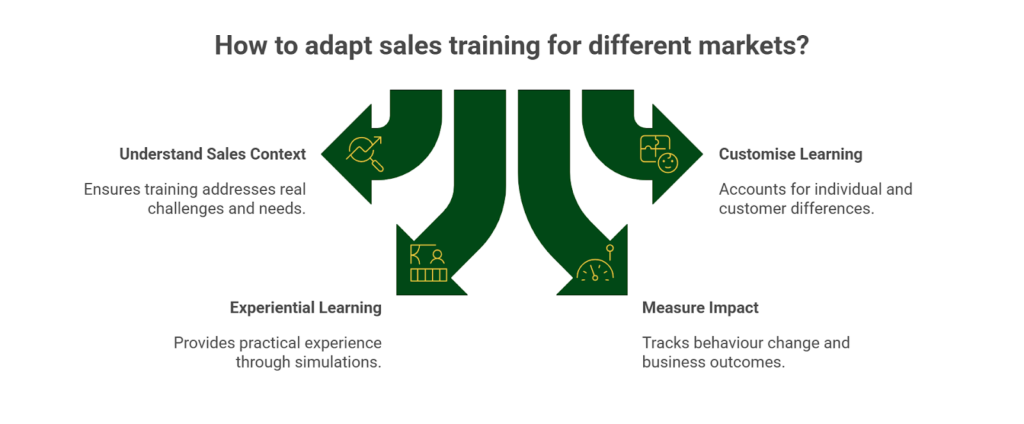
Image: Key ways to adapt sales training for different markets
Start With Understanding the Sales Context
Training should begin with a clear view of the team’s current challenges, customer dynamics, and sales process. This involves reviewing performance data, sales processes, and feedback from the team. Without this clarity, training risks solving the wrong problem. Diagnosis ensures training is built on real needs, not assumptions.
Customise Learning for People and Customers
Sales teams aren’t just different across companies; they vary within companies, across roles, and by region. A one-size-fits-all approach fails to account for these differences.
Tailored programmes take into account who your people are (their experience, confidence, and learning style) and who your customers are (their expectations, objections, and decision-making behaviours).
When training reflects the real world, it becomes more engaging and more useful.
Experiential Learning That Reflects Real Sales Scenarios
Modern sales training should go beyond theory and immerse participants in actual selling situations. Scenario-based learning, role plays, and simulations offer a safe space for trial and error. This allows reps to test approaches, make mistakes, and build confidence.
The closer training mirrors day-to-day conversations, the easier it is for teams to apply what they learn.
Measure Behaviour Change and Business Impact
Success isn’t defined by how many people completed the training—it’s measured by what changes after. Did sales behaviours shift? Are deals progressing faster? Are customer conversations improving?
Post-training reinforcement, coaching, and clear KPIs are essential for tracking real impact. Training that doesn’t move the needle on business outcomes needs to be re-evaluated.
Also read: How to Conduct a Sales Training Needs Assessment for Your Business?
Traditional vs Modern Sales Training: Which Is Better for Malaysian Businesses?
Traditional sales training still serves a purpose, especially for onboarding new hires or delivering foundational product knowledge. However, in today’s dynamic Malaysian sales environment, traditional methods often fall short in addressing the complex realities that sales teams face.
Modern training approaches are better suited to:
- Building trust in relationship-driven sales environments
- Supporting complex, multi-stakeholder decision-making
- Adapting to the diverse expectations of Malaysia’s multi-ethnic customer base
These modern programmes are more effective because they focus on real-world selling—not just theory. By emphasising behaviour change, cultural relevance, and practical skills, they help salespeople perform better in the field and respond confidently to local nuances.
For Malaysian businesses looking to drive meaningful and lasting sales results, a contextual, learner-centred approach is no longer optional—it’s essential.
FAQ
Which sales training method is more effective today?
Modern sales training is generally more effective because it focuses on application, context, and long-term capability development.
What are modern sales training methods?
Modern methods include simulations, role-plays, coaching, and scenario-based exercises customised to the learner’s role and market.
How does culture affect sales training effectiveness?
Culture influences how people build trust, communicate, and make decisions, especially in high-context markets like Malaysia. Sales training that ignores local values, language nuances, and buyer behaviours is less likely to resonate or drive real change.
Is modern sales training better for relationship-based selling?
Yes, modern sales training supports relationship-first selling by focusing on empathy, active listening, and consultative communication. It equips salespeople to adapt to buyer cues, build trust, and engage in meaningful, long-term partnerships.
What makes sales training effective in Malaysia?
Effective sales training in Malaysia blends cultural relevance with role-specific practice. It must reflect the multi-ethnic buyer landscape, emphasise credibility and relationship-building, and equip teams to navigate high-context, trust-driven sales conversations.
Conclusion
The effectiveness of sales training depends on how well it reflects the real world your team operates in. In Malaysia’s relationship-first, multi-cultural environment, traditional approaches often fall short not because they’re outdated, but because they overlook the human, contextual, and cultural dynamics at play.
Modern sales training, on the other hand, focuses on behavioural change, practical scenarios, and emotional intelligence—elements that directly align with how business is done here. When training reflects the way your team actually sells, it creates real impact.
This is why partnering with the right training provider matters.
At Thriving Talents—winner of two Gold Awards at the HR Vendors of the Year 2025, including Best Sales Training Provider—we design sales programmes grounded in behavioural science, market relevance, and local business realities.
Looking to modernise your sales training? Thriving Talents delivers locally relevant, high-impact programmes built for Malaysia’s relationship-driven market. Explore our approach here.