
Key takeaways:
- Gen Y and Gen Z need structured AI learning that goes beyond general digital fluency.
- Prompt engineering, data literacy, and AI ethics are becoming core skills for long-term employability.
- Soft skills like empathy and communication are more critical than ever in AI-enhanced workplaces.
- Role-based, experiential training is more effective than one-size-fits-all AI awareness sessions.
- Coaching drives real behaviour change by helping employees apply AI skills with confidence.
- Thriving Talents delivers AI upskilling through customised, business-aligned learning journeys.
Introduction
Artificial intelligence is no longer a future concept. It’s reshaping how organisations operate today. From automating workflows to enhancing decision-making, AI is transforming jobs, industries, and leadership expectations.
In fact, according to the Jobstreet by SEEK 2025 Report, around 70% of employers in Malaysia now assess AI skills during hiring, highlighting how critical these capabilities have become for job readiness and organisational performance.
As digital natives, Gen Y and Gen Z are expected to lead this transition. But while they’re comfortable with technology, they still need new skills to navigate an AI-enhanced workplace.
The challenge? Most upskilling programmes focus on tools, when what’s really needed are skills, behaviours, and mindset shifts that enable people to work alongside intelligent systems effectively and ethically.
Why is AI Upskilling Important for Gen Y and Gen Z?
As the workplace continues to transform, Gen Y and Gen Z are facing a rapidly shifting landscape. Here’s why future-focused upskilling is not just beneficial, but essential, for these emerging leaders:
- AI is reshaping entry-level and mid-career roles: Many tasks traditionally performed by Gen Y and Gen Z are increasingly automated or augmented by AI.
- Future employability depends on AI fluency: Understanding how to work with AI tools is becoming a baseline skill across industries, not a niche capability.
- Digital native does not mean AI-ready: Familiarity with technology doesn’t automatically translate into the ability to use AI effectively, ethically, or strategically.
- AI amplifies both performance and mistakes: Without proper upskilling, poor prompts, weak judgment, or overreliance on AI can lead to flawed outcomes.
- Career progression will favour adaptable learners: Gen Y and Gen Z, who can continuously learn, experiment, and evolve alongside AI, will advance faster.
Also read: Why AI in Corporate Training Is the Next Big Shift for HR & L&D Teams.
What Skills Are Needed for an AI-Driven Future?
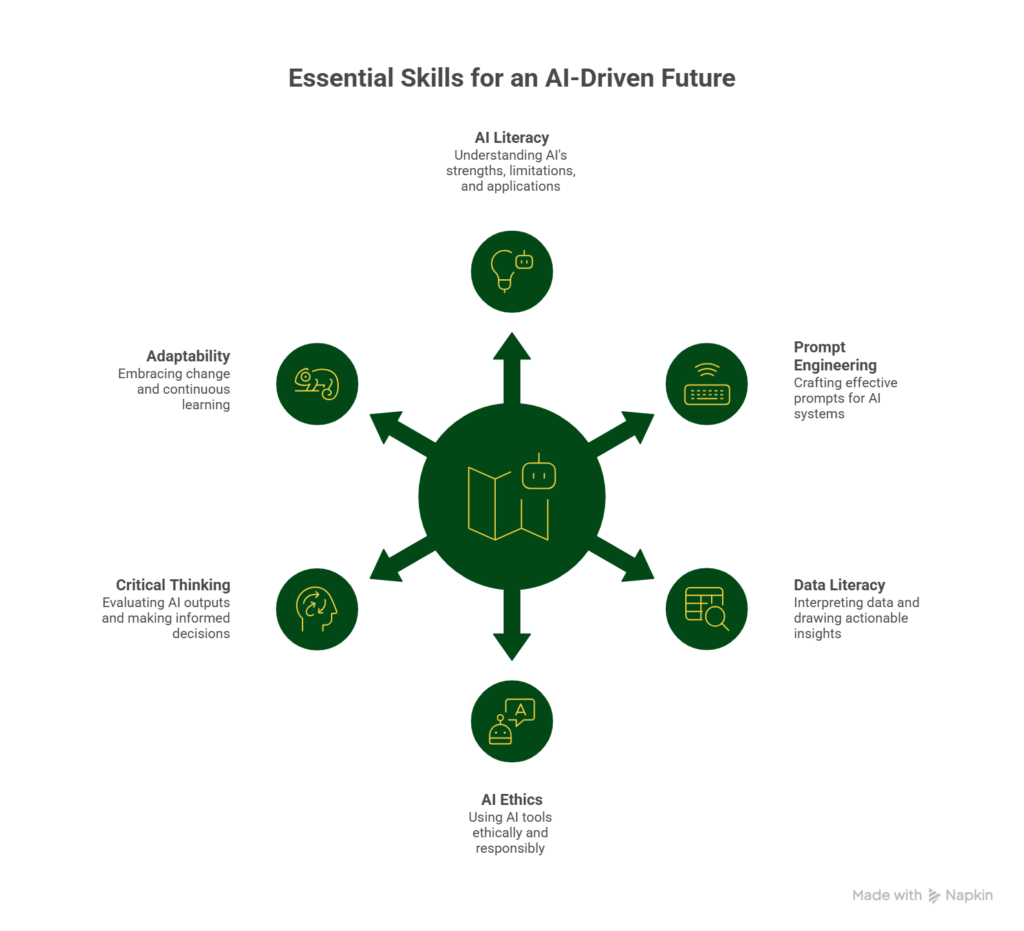
Image: Skills needed for an AI-driven future
To stay relevant in the age of AI, Gen Y and Gen Z need more than technical exposure—they need a well-rounded set of skills that blend digital fluency with human judgment.
Let’s look at the most essential ones to build:
AI Literacy and Fundamentals
A foundational understanding of how AI works—its strengths, limitations, and real-world applications—is the entry point for any upskilling program. Without this, employees may misuse or misunderstand AI tools.
Prompt Engineering and Human–AI Collaboration
Crafting the right prompts is key to extracting useful outputs from AI systems like ChatGPT or Copilot. Gen Y and Gen Z must learn how to think with AI, not just type into it.
Data Literacy
Being able to interpret data, ask the right questions, and draw actionable insights is now core to almost every role. Data literacy empowers employees to make smarter, AI-supported decisions.
AI Ethics, Governance, and Responsible Use
Understanding bias, fairness, and data privacy isn’t just for IT teams. It’s a shared responsibility. The new generations must be equipped to use AI tools ethically and within regulatory or organisational frameworks.
Critical Thinking and Judgment
AI can offer suggestions, but not all of them should be followed. This skill helps young professionals evaluate outputs, question assumptions, and make informed decisions when AI falls short.
Adaptability and Continuous Learning
In an environment where tools and tasks are evolving constantly, being coachable and curious is a superpower. Lifelong learning will be a defining factor for Gen Y and Gen Z career success in an AI-driven world.
Why AI Upskilling Looks Different for Gen Y and Gen Z
Gen Y and Gen Z are often described as digital natives, but that doesn’t automatically make them AI-ready. Being fluent in apps and social platforms is not the same as understanding how to collaborate with artificial intelligence in a professional setting. They still need structured learning to use AI critically, responsibly, and effectively.
These generations also have different expectations when it comes to learning. They’re more likely to disengage from passive, lecture-style content and respond better to interactive, hands-on formats. Applied, experiential learning that feels purposeful and tied to their work tends to drive better engagement and retention.
As AI reshapes the workplace, human skills like empathy, collaboration, and communication are becoming just as important as technical fluency. While older generations often developed these interpersonal skills over decades of face-to-face work, Gen Y and Gen Z are entering hybrid and digital-first environments.
Upskilling for them must include not only AI tools, but also a deliberate focus on developing emotional intelligence to thrive in AI-enhanced teams.
How Can Organisations Embed AI Skills Into Existing Learning Programs?
Embedding AI skills effectively requires more than adding new courses—it means integrating AI learning into how people already learn and work. Here’s how organisations can build AI capability in a way that feels relevant, practical, and sustainable.
Start With Role-Based Skill Mapping
Before launching any AI learning initiative, start with a clear understanding of what each role actually needs. A data analyst might need skills in data ethics and prompt design for analytics, while a customer service executive might benefit more from tools like AI chat support systems.
- Conduct skill audits by role and department to determine where AI will most impact workflows.
- Focus on practical, role-relevant capabilities rather than generic AI awareness sessions.
- Involve business leaders and employees in identifying real use cases to build buy-in.
This ensures that learning paths are meaningful and immediately useful, boosting both engagement and adoption.
Integrate AI Skills Into Current Training Frameworks
Rather than adding AI learning as a siloed, one-time event, embed it into your existing leadership, sales, and operational training.
- Include AI-related scenarios in leadership development programs (e.g. ethical decision-making with AI tools).
- Embed AI tools in sales simulations or marketing case studies.
- Update digital transformation modules to include human-AI collaboration best practices.
Making AI part of your current learning culture allows employees to understand it as an enhancement of their current roles and responsibilities.
Create Progressive Learning Pathways
Employees need structured learning journeys that guide them through different stages of AI adoption. Not everyone needs to become a data scientist, but everyone should become AI-literate in their context.
- Design tiered learning levels: foundational (awareness), intermediate (application), and advanced (decision-making or automation).
- Mix learning formats: self-paced modules, hands-on workshops, group challenges, and peer learning.
- Provide regular reinforcement through coaching, microlearning, and internal AI communities of practice.
This approach builds confidence and competence over time, rather than overwhelming employees with everything at once.
Explore more: Understanding Gen Z in the Workplace: What HR Leaders Need to Know.
What Is the Role of Training and Coaching in AI Upskilling?

Knowing how AI works is just the beginning. Real transformation happens when people shift how they think, communicate, and make decisions and that’s exactly where training and coaching come in.
Experiential Workshops for Practical Application
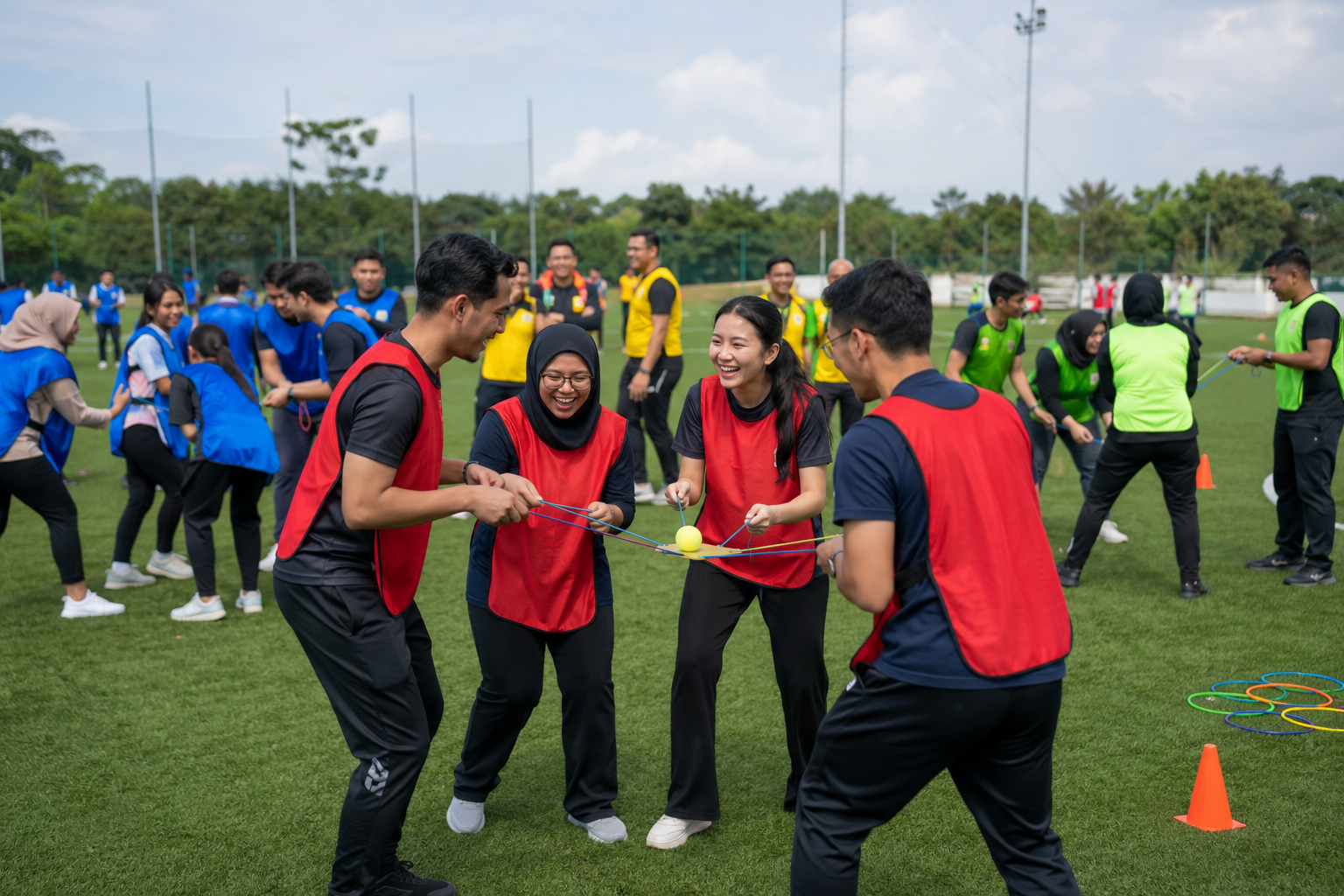
Workshops offer hands-on, immersive learning that goes far beyond theory. By working through real business scenarios with AI tools, employees can safely test ideas, receive immediate feedback, and understand how AI fits into their daily workflows.
This active approach helps build muscle memory and accelerates capability development.
Coaching to Reinforce Behaviour Change
Training provides knowledge, but coaching helps people act on it. Ongoing coaching enables employees to overcome hesitation, adapt their mindset, and gradually integrate AI into how they think, solve problems, and make decisions.
It also personalises the learning experience, addressing unique challenges across individuals or teams.
Building Confidence and Accountability
Confidence with AI doesn’t come from knowing what it is—it comes from using it effectively. Coaching fosters accountability by encouraging consistent practice and reflection, which leads to long-term adoption.
It ensures employees feel supported as they build new habits and take ownership of their AI learning journey.
Also read: Leadership & Decision Making in the Age of AI: What Corporate Leaders Should Prioritise.
How Thriving Talents Helps Organisations Build AI-Ready Workforces
Building an AI-ready workforce starts with identifying the right skills for each role and aligning learning programs to real business needs. Effective upskilling goes beyond awareness—it must be practical, role-relevant, and reinforced over time.
By combining workshops, coaching, and on-the-job application, organisations can help employees build lasting capability and confidence with AI. These efforts must focus on long-term behaviour change, not just short-term knowledge transfer.
This is exactly how Thriving Talents supports organisations—through tailored, insight-driven learning journeys that make AI skills stick.
Explore our AI-ready training and workshop solutions today.
FAQ
What AI skills are most in demand today?
Skills like prompt engineering, data literacy, critical thinking, and AI ethics are increasingly essential across industries. These enable employees to collaborate effectively with AI while making informed, responsible decisions.
What is the role of workshops and coaching in AI upskilling?
Workshops provide hands-on experience in applying AI tools to real-world scenarios. Coaching reinforces that learning by building confidence, addressing mindset shifts, and driving lasting behaviour change.
Are soft skills still important in an AI-driven workplace?
Yes. Soft skills are more important than ever. As AI takes over routine tasks, human capabilities like empathy, communication, and ethical judgment become key differentiators.
How can companies prepare their workforce for AI transformation?
They must embed AI learning into existing training programs, aligned to job roles and business needs. Reinforcement through experiential learning and coaching ensures deeper adoption.
How long does it take to upskill a workforce for AI?
AI upskilling is an ongoing process, but meaningful results can begin within weeks if programs are well-designed and supported.
Do all employees need technical AI skills?
Not necessarily. Most roles require AI fluency, not deep technical expertise. Employees should know how to use AI tools responsibly, not how to build them.
Conclusion
AI transformation isn’t just about adopting the latest tools; it’s about equipping your people to use them with confidence, creativity, and integrity. For Gen Y and Gen Z especially, success in the AI era will depend on the ability to blend technical fluency with ethical decision-making and strong human skills.
Organisations that treat upskilling as a strategic, long-term investment—rather than a one-time training event—will build future-ready teams that can adapt, lead, and thrive in a rapidly evolving landscape.
If you’re ready to design AI learning experiences that are relevant, role-specific, and built to last, Thriving Talents is here to help you lead that transformation.